
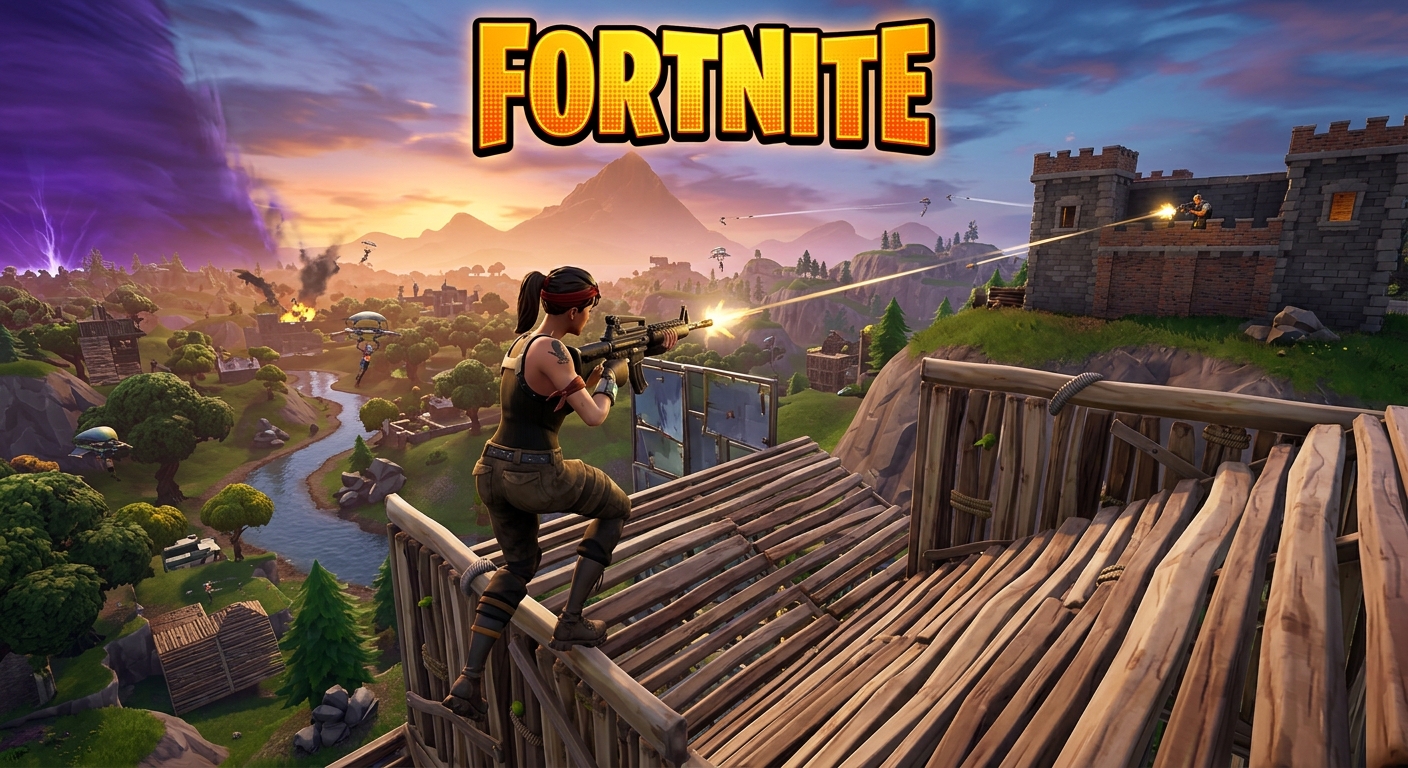
Fortnite transformed the gaming landscape by combining fast-paced third-person shooting with real-time building mechanics. This unique hybrid forced players to develop entirely new skill sets beyond traditional aim and positioning.
The building system completely reshaped engagement rules. Instead of relying solely on natural cover, players can instantly construct walls, ramps, floors, and roofs to alter line-of-sight and secure vertical advantage during high-stakes gunfights.
Vertical control is often the decisive factor in close-quarters combat. Securing the high ground allows players to peek over structures, shoot with superior angles, and easily track enemy movements while remaining partially protected.
Mastering edit maneuvers is what separates casual players from high-level competitors. Being able to rapidly cut windows, doors, or half-walls into existing structures creates unpredictable peak angles and instant escape routes.
Piece control has become the core meta of advanced box fighting. This strategy involves placing your own building pieces around an opponent before they can, effectively trapping them inside a controlled space.
Crosshair placement is critical when executing edits. Keeping the reticle aligned with the grid points of a wall minimizes hand movement, resulting in lightning-fast edits and minimal exposure to return fire.
Managing inventory space effectively requires balancing raw firepower with defensive items. A standard loadout usually consists of an assault rifle, a shotgun, mobility tools, and two dedicated healing slots.
Shotguns remain the primary damage dealers in close-range skirmishes. Landing a high-damage pump shotgun shot before instantly resetting a wall edit forms the basic rhythm of modern box fights.
Assault rifles provide sustained pressure at mid-to-long ranges and serve as effective tools for breaking down enemy builds. Pressuring structures prevents opponents from healing or comfortably holding an angle.
Mobility items dictate the pace of rotations across the map. Tools like shockwave grenades, grapple hooks, or vehicles allow players to disengage from unfavorable fights or claim prime positioning early.
The storm circle acts as an environmental timer that dictates player movement. Understanding rotation timing prevents taking unnecessary damage and reduces the risk of getting gatekept at the zone border.
Dead-side rotation is a tactical approach where players move along the edge of the storm furthest from the majority of the lobby. This minimizes the chance of running into multi-team engagements.
Third-party opportunities arise when two enemy squads engage in a fight. Waiting for both teams to expend resources and health allows a smart solo or team to clean up the remaining players with minimal risk.
Resource management underpins every decision in a match. Wood offers high starting health for quick cover, stone provides balanced durability, and metal acts as the strongest defense once fully built.
Farming materials efficiently throughout the early game ensures you do not run out of builds during final-zone chaos. Striking weak points on objects speeds up gathering time significantly.
Communication within a squad relies on clear, precise callouts rather than generic alerts. Sharing details about enemy locations, health status, and material counts ensures coordinated pushes.
Focusing target fire on a single enemy isolates them from their team. When multiple squad members shoot the same target simultaneously, even full-shielded opponents fall in seconds.
Sound cues provide vital information about surrounding threats. Enabling visual sound effects helps pinpoint footsteps, chest locations, vehicle engines, and distant gunfire with extreme precision.
Drop spot selection sets the trajectory for the entire match. High-density locations offer abundant loot but high immediate conflict, while quiet landmarks allow for steady resource gathering.
Chest spawns and floor loot routes should be memorized for your primary drop location. Reaching a weapon seconds before a contested opponent usually secures the landing zone.
Weapon rarity dictates damage output, reload speed, and accuracy stats. Upgrading gear at upgrade benches or trading with non-player characters gives a noticeable edge in head-to-head fights.
Peeking from the right side of your character provides a built-in mechanical advantage. Because the camera sits over the right shoulder, right-hand peeks expose far less of your character model while firing.
Restoring health and shields efficiently requires smart positioning. Using quick consumable items like mini shield potions before committing to longer channels like big shields maximizes time efficiency.
Endgame circles in competitive matches demand high spatial awareness. As the storm moves into moving zones, tunneling—building continuous boxes to walk through—becomes mandatory for survival.
Tarping is the act of constructing protective corridors ahead of your team while moving into late-game zones. It consumes high amounts of materials but keeps the team safe from surrounding lobbies.
Conserving materials during the mid-game prevents running on empty during the final moving zones. Walking existing paths or using natural terrain helps stretch your build count.
Mental composure during high-pressure late-game scenarios prevents simple mechanical errors. Staying focused on the next rotation path rather than panicking keeps decision-making clear.
Reviewing match replays provides direct insight into structural mistakes and poor positioning choices. Analyzing losses reveals patterns in judgment that simple practice cannot fix.
Warm-up routines in custom edit courses and aim trainers sharpen muscle memory before stepping into public or competitive lobbies. Consistent mechanical practice keeps edits smooth under pressure.
Adaptability remains the ultimate skill in Fortnite. With constantly shifting loot pools, map updates, and mechanical adjustments, the best players are those who continuously refine their strategy to fit the current meta.