
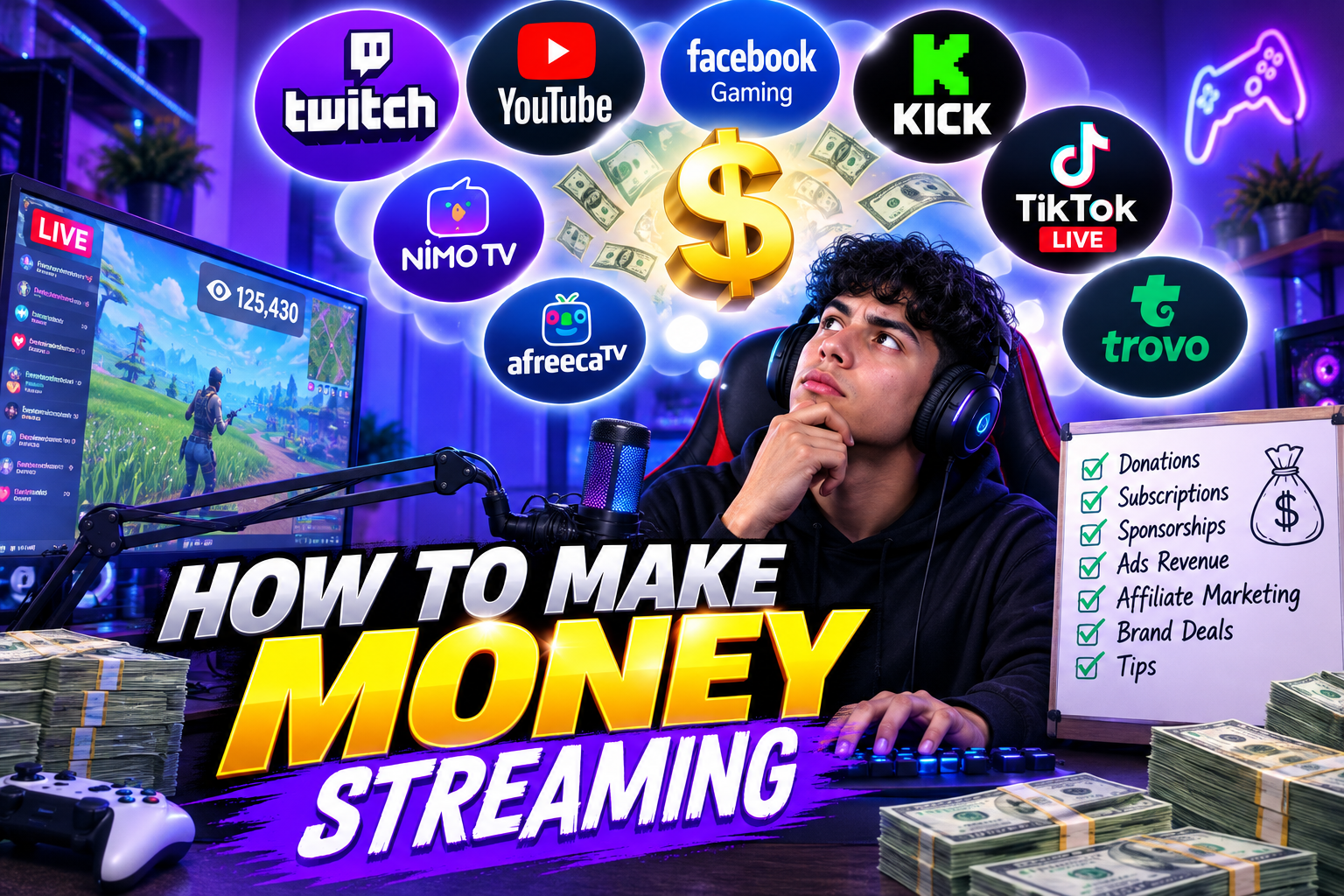
The video game industry offers more direct monetization avenues today than at any point in digital history, turning casual play into viable remote careers. Modern creators and competitive players no longer rely solely on traditional platform ads; instead, they build diversified income ecosystems across live streaming, tournament platforms, and Play-to-Earn economies. Setting up your hardware, streaming tools, and payout profiles correctly establishes a solid technical foundation before you launch your brand. Mastering audience conversion, game mechanics, and platform-specific algorithms will set your channel apart from casual hobbyists. This complete guide covers setup procedures, platform payout structures across Twitch, YouTube, Kick, and TikTok, play-to-earn mechanics, competitive wager platforms, and high-converting monetization strategies.
To begin building your gaming business infrastructure, start by setting up your dedicated workstation display, high-speed network connection, and account profiles. Connect your PC or console directly to your router using a physical Ethernet cable to ensure low latency and zero dropped frames during streams or ranked play. Create verified creator accounts across all major broadcasting networks and competitive platforms using a consistent brand handle for easy viewer discovery. Install reliable broadcasting software on your PC, configuring your video encoding settings to prioritize performance and clear visual quality. Link your business banking or digital payment accounts directly to each platform’s payout portal to streamline monthly revenue deposits securely. Test your microphone audio, webcam lighting, and game audio routing in preview mode before going live or joining cash tournaments.
Setting up payout accounts and software tools correctly prevents delayed payments and technical interruptions during live sessions or competitive matches. Access the account settings dashboard on your chosen streaming platforms and fill out all tax verification and payout preference documents accurately. Choose direct bank deposit or trusted e-wallet services to minimize international transaction fees and speed up processing times. Install secondary overlay software and chat bot plugins to automate viewer alerts, custom channel point redemptions, and donation prompts on screen. Configure security protocols, including two-factor authentication across all streaming accounts, game profiles, and payment portals to protect your earnings from unauthorized access. Maintain an organized desktop folder containing your channel graphics, sponsorship kits, and overlay assets for quick access during updates.
Maximizing your earnings requires a clear understanding of how live streaming platforms pay creators through subscriptions, ads, and digital viewer gifts. Twitch remains a primary destination for live streaming, offering subscription revenue splits, Bits donations, ad revenue sharing, and bounty board sponsorships for affiliates. YouTube Live provides creators with Super Chats, Super Stickers, channel memberships, and a robust ad revenue split powered by long-form video discovery. Kick has disrupted the market with a creator-friendly ninety-five to five subscription revenue split and hourly creator incentive payouts for consistent broadcasters. TikTok Live offers massive viewer reach, allowing creators to earn substantial income through virtual gifts, diamonds, and direct fan tips during live broadcasts. Balancing your presence across these core platforms builds a resilient income strategy protected against single-platform policy changes.
Beyond streaming, competitive gaming platforms allow skilled players to monetize their direct gameplay performance through cash matches, wagers, and ranked tournaments. Platforms like Repeat.gg and GameBattles host automated tournaments for popular multiplayer titles, rewarding top leaderboard players with real cash prizes. Wagering platforms such as PlayerDuel and CheckMate Gaming allow head-to-head competition where players stake money on their own match outcomes safely. Esports platforms like FACEIT offer subscription leagues, ladder competitions, and tournament prize pools for competitive players grinding tactical shooters and battle royales. Game testing services and bug-bounty platforms like PlaytestCloud pay gamers by the hour to play unreleased titles and provide detailed feedback. Combining competitive match earnings with live broadcast content creates a powerful double-monetization loop for skilled gamers.
Navigating the emerging Play-to-Earn and web3 gaming landscape requires strategic game selection, market research, and active digital asset management. Modern blockchain-integrated games reward players with tradeable digital tokens, unique NFT item drops, and governance tokens for completing daily tasks. Players can trade rare in-game cosmetics, characters, and virtual land on open digital marketplaces for real-world currency or stablecoins. Renting out high-value in-game assets through gaming guilds allows experienced players to earn passive income yields from newer players. Always research game economies, developer transparency, and token liquidity thoroughly before committing time or capital to play-to-earn ecosystems. Focus on titles with fun core gameplay loops and sustainable economic models to build steady, long-term asset value.
Live Platform Payouts, Subscription Models, and Monetization Setup
Unlocking affiliate and partner status across major live streaming networks is your first step toward building recurring monthly subscription income. Twitch requires creators to hit specific follower counts, broadcast hours, and average viewer thresholds to unlock subscriber buttons and bit donations. YouTube Live allows creators to monetize once they meet partner program criteria, enabling channel memberships and Super Chat features during streams. Kick offers low barrier-to-entry partner metrics, giving new creators immediate access to favorable subscription revenue splits from their very first streams. TikTok Live requires creators to meet local follower minimums before enabling live streaming capabilities and virtual gift conversion. Consistently broadcasting on a predictable schedule accelerates your progress toward reaching these essential monetization milestones across all platforms.
Understanding how viewer subscriptions, channel memberships, and virtual currency gifts convert into real cash helps you optimize your stream prompts. Tier-one, tier-two, and tier-three subscriptions provide viewers with custom channel emotes while delivering predictable monthly revenue to your creator account. Virtual bits, diamonds, and live gifts allow viewers to support your stream spontaneously during exciting gameplay plays or funny moments. Set up visual goal bars on your stream layout to show progress toward community goals, such as hardware upgrades or extended streams. Acknowledge every donation, subscriber, and gift warmly on screen to encourage other viewers to participate in supporting the channel. Offering exclusive perks, such as subscriber-only Discord channels or game lobbies, adds tangible value to paid memberships.
Optimizing on-stream advertisement density ensures you generate steady ad revenue without frustrating viewers or damaging viewer retention rates. Platform dashboards allow creators to schedule automatic ad breaks during natural game downtime, such as lobby queues or map loading screens. Running scheduled ad breaks during non-gameplay moments prevents viewers from missing key tournament action or clutch gameplay plays. Twitch and YouTube offer ad revenue share programs that pay creators based on impression counts and overall viewer location demographics. Balance ad frequency carefully, using short automated breaks to keep pre-roll ads disabled for new viewers entering your stream. Strategic ad placement maintains high viewer retention while maximizing passive revenue generation across every broadcast session.
Developing indirect fan monetization channels through third-party donation platforms lowers transaction fees and increases total profit margins. Setting up tip pages via services like Streamlabs or Streamelements allows viewers to donate directly to your account using credit cards or PayPal. Third-party tipping bypasses platform subscription cuts entirely, delivering a higher percentage of the donated money straight to your business bank account. Integrate text-to-speech audio alerts for direct tips, allowing viewers to send funny voice messages that play live on your broadcast. Create milestone donation goals for channel events, charity streams, or long-term gear upgrades to give viewers a clear reason to contribute. Always remind viewers that tips are voluntary, keeping the focus on delivering entertaining, high-value gaming content.
Offering exclusive digital products, custom physical merchandise, and branded apparel converts casual stream viewers into long-term paying customers. Print-on-demand services allow creators to launch customized t-shirts, hoodies, mugs, and mousepads with zero upfront inventory investment or shipping hassles. Design apparel featuring popular channel inside jokes, iconic emote art, or your personal creator logo to build brand recognition offline. Promotely feature your merchandise store link in your stream panels, social media bios, and automated chat bot announcements. Wear your own merchandise during broadcasts to showcase product quality and build organic viewer interest in your store catalog. High-quality physical products create an additional revenue stream while turning your dedicated fans into walking brand ambassadors.
Tracking your gross creator income, platform service fees, and net payouts across every platform ensures accurate financial management. Maintain a detailed spreadsheet tracking monthly subscription payouts, ad revenues, tip totals, and competitive prize money separately. Calculate your average revenue per viewer to measure how effectively your content converts passive traffic into active financial support. Set aside a percentage of all incoming income for local and federal taxes to avoid end-of-year financial surprises. Reinvest a portion of your net profits back into channel improvements, such as faster PC hardware, professional lighting, or custom graphics. Disciplined financial tracking transforms irregular gaming income into a sustainable, long-term professional business operation.
Competitive Gaming, Tournament Wagers, and Skill Monetization
Transforming high-level gameplay skills into consistent cash earnings requires entering organized online tournaments, cash ladders, and competitive leagues. Platforms like Repeat.gg track your in-game statistics automatically, paying out prize pools based on your performance in standard public matches. Esports organization host open-entry weekend tournaments across fighting games, sports simulators, and battle royales with guaranteed prize pools. Participating in organized community cups builds your competitive resume while helping you gain experience playing under high-pressure match conditions. Review your match replays regularly to analyze mistakes, refine strategic callouts, and improve decision-making before entering high-stakes tournaments. Consistent placement in cash tournaments generates both immediate income and industry visibility for potential team sponsorships.
Head-to-head wager platforms provide skilled competitive players with opportunities to bet on their own performance in 1v1 or team matches. Services like CheckMate Gaming and PlayerDuel match players of similar skill levels, holding match entry fees in secure escrow until match completion. Both players upload screenshot or video proof of match results, triggering automatic prize payouts to the winning player’s wallet. Always record your entire match using local recording software to resolve score disputes or rule violations with platform support staff quickly. Start with low-stakes matches to familiarize yourself with platform rules, map bans, and host connection procedures before wagering larger sums. Consistent winning percentages on wager platforms turn daily ranked practice sessions into a direct source of income.
Esports scouting platforms, semi-pro leagues, and collegiate gaming programs offer structured salary paths for top-tier competitive players. Consistently ranking at the top of regional game leaderboards brings your profile to the attention of professional team scouts and organization managers. Joining a semi-pro esports organization provides monthly player stipends, tournament entry fee coverage, and dedicated team coaching support. Collegiate esports programs offer athletic scholarships and educational funding for competitive players representing their universities in league play. Build professional social profiles showcasing your tournament wins, game stats, and high-level highlight clips to attract team recruiters. Professional team contracts provide financial stability, allowing you to focus entirely on competitive performance and brand growth.
Participating in paid remote playtesting sessions allows gamers to earn steady hourly income by reviewing unreleased video game titles. Companies like PlaytestCloud, UserTesting, and GSTATIC connect game developers with specific player demographics for targeted playtesting feedback. Playtesters complete specific level objectives, evaluate user interfaces, and report software bugs while speaking their thoughts out loud into a microphone. Video recordings of your playtest session are submitted to developers to help them refine game design, balance mechanics, and fix technical errors. Completing playtests reliably builds your rating within tester networks, unlocking access to higher-paying test opportunities and exclusive game previews. Remote playtesting provides flexible earnings that fit easily around your regular streaming or competitive schedule.
Coaching less experienced players through private coaching sessions creates a lucrative income source derived directly from your game knowledge. Platforms like Metafy and Gamer Sensei allow skilled players to list custom coaching packages, set hourly rates, and manage client bookings. Offer live VOD reviews, mechanics drills, and real-time match spectating to help amateur players improve their ranked standings and game awareness. Create structured lesson plans for common player mistakes, such as poor positioning, bad crosshair placement, or inefficient resource management. Collect positive student reviews on your coaching profile to build credibility and justify higher hourly coaching rates over time. Teaching others sharpens your own understanding of core game mechanics while generating reliable revenue off-stream.
Organizing and hosting your own community tournaments creates sponsorship opportunities while building authority within your game’s community. Partner with local businesses or digital brands to sponsor prize pools in exchange for logo placement and on-stream product mentions. Charge modest team registration fees or rely on channel point redemptions to fund prize pools for recurring community cups. Broadcast and cast the tournament matches live on your stream channel, featuring high-energy commentary and real-time bracket updates. Re-package tournament highlight reels into engaging YouTube videos and short clips to maximize content output from a single event. Hosting successful tournaments establishes your brand as a central community hub while opening doors for larger corporate event partnerships.
Play-to-Earn Economics, Web3 Gaming, and Asset Trading
Navigating Play-to-Earn gaming ecosystems requires understanding how blockchain integration turns in-game items, characters, and currencies into tradeable digital assets. Players earn native game tokens by winning matches, completing daily quests, or controlling strategic map territories within decentralized games. These earned tokens can be swapped on decentralized exchanges for stablecoins or fiat currency, creating a direct work-to-earn dynamic. Rare in-game items, skin cosmetics, and virtual land plots are minted as unique digital collectibles that players own outright off-game servers. Evaluate game tokenomics carefully, checking daily active user counts and asset liquidity to ensure economic stability before investing time. Web3 gaming rewards dedicated players who understand digital asset trading, market supply, and virtual economics.
Participating in gaming guilds and asset scholarship programs allows players to access expensive P2E game assets without upfront capital investment. Gaming guilds purchase high-value NFTs, such as rare characters or land plots, and rent them to active players known as scholars. Scholars use these rented assets to play the game, sharing earned token rewards with the guild based on agreed percentage splits. Joining a reputable guild provides access to player training, competitive strategies, and supportive gaming communities built around web3 titles. As a scholar demonstrates high skill and consistency, guilds often upgrade their assigned assets to increase overall earning potential. Guild scholarship models lower entry barriers, letting gamers start earning immediately without financial risk.
Trading high-demand in-game items, virtual skins, and rare collectibles across official secondary marketplaces generates substantial trading profits. Digital marketplaces like OpenSea, Magic Eden, and platform-specific auction houses allow players to buy, sell, and trade digital game assets globally. Monitor market trends, patch notes, and meta shifts to identify under-priced assets before game updates make them valuable. Flipping rare cosmetic skins, event-exclusive items, and limited-edition character cards requires patience and deep market knowledge. Always verify marketplace URLs and utilize secure hardware wallets to store high-value digital collectibles safely away from phishing threats. Active marketplace trading rewards players who treat virtual game economies with the seriousness of financial markets.
Virtual real estate management within open-world metaverses and sandbox games offers unique monetization avenues for digital landowners. Players who own virtual land plots can build custom interactive experiences, mini-games, or digital venues that charge entry fees in platform tokens. Renting out prime virtual land located near high-traffic spawn points to brands for virtual billboard advertising generates passive rental income. Hosting live virtual events, esports watch parties, or music concerts on your digital property attracts visitors and increases land value. Developing valuable virtual property requires learning basic 3D editing tools, scene builders, and scripting languages supported by the game engine. Virtual land ownership transforms gaming spaces into income-generating digital real estate assets.
Staking native game tokens and participating in decentralized governance pools yields passive financial returns for long-term players. Many play-to-earn titles allow players to lock up their earned tokens in governance smart contracts to earn annual interest yields. Staking tokens grants voting rights on future game updates, balance patches, and community treasury fund allocations proposed by developers. Compounding your earned interest staking rewards increases your overall token holdings over time without requiring extra gameplay hours. Always assess lock-up periods and token inflation rates to ensure staking rewards offset potential market price fluctuations. Strategic token staking builds long-term wealth within gaming ecosystems you play and support actively.
Evaluating risk factors, smart contract security, and game sustainability protects your earnings and digital assets from market volatility. Web3 gaming markets experience rapid price fluctuations, requiring players to take profits regularly into stable fiat currencies or low-risk assets. Verify that game smart contracts have undergone third-party security audits to minimize vulnerabilities to code exploits or hacks. Avoid games that rely purely on continuous new player deposits to sustain token payouts, prioritizing games with real utility and player retention. Diversify your earnings across multiple game titles and asset classes rather than holding all earnings in a single game token. Managing risk intelligently ensures that your play-to-earn gaming efforts yield stable, lasting financial returns over time.
Sponsorship Acquisition, Brand Integration, and Business Operations
Securing corporate brand sponsorships requires creating a professional media kit that highlights your audience demographics, reach, and conversion potential. Package your channel analytics into a clean PDF document detailing monthly stream hours, average concurrent viewers, and social media follower counts. Highlight key audience demographics, such as primary viewer age brackets, geographic locations, and top gaming interests, to attract relevant brands. Pitch products that align naturally with your gaming niche, such as PC hardware, gaming chairs, energy drinks, and gaming accessories. Reach out directly to brand marketing managers via professional business email, explaining clearly how your community provides value for their product. A professional pitch and clear audience data make your channel an attractive investment for corporate sponsor budgets.
Integrating sponsored content, product placements, and game key activations into your broadcasts seamlessly maintains viewer trust and engagement. Disclose all sponsored activations clearly on screen and in chat, adhering to advertising guidelines and consumer protection laws strictly. Showcase sponsored peripherals or gaming gear naturally during streams, sharing your honest user experience and highlighting key features on camera. For sponsored game streams, familiarize yourself with game controls and key mechanics beforehand to deliver an entertaining, competent gameplay preview. Use custom promo codes and affiliate tracking links provided by sponsors to track sales generated directly by your audience. Delivering strong conversion results on initial campaigns leads to recurring sponsorship deals and long-term brand partnerships.
Negotiating fair contract terms, payout rates, and usage rights for your sponsored content protects your brand value and income security. Request clear campaign briefs detailing deliverable expectations, such as required broadcast hours, social posts, or chat bot link frequency. Ensure sponsorship contracts specify exact payment terms, processing timelines, and kill fees in case campaigns are canceled unexpectedly. Restrict brand usage rights for your likeness, clips, and recorded VODs to specified campaign timeframes to avoid uncompensated commercial use. Seek non-exclusive agreements whenever possible, allowing you to partner with non-competing brands across different product categories simultaneously. Understanding contract terms ensures you receive fair financial compensation for the marketing value your channel provides.
Establishing a formal business structure, such as a Limited Liability Company, protects your personal assets and simplifies business tax reporting. Open a dedicated business checking account to process all incoming creator revenue, sponsor payouts, and outgoing business operational costs separately. Use professional accounting software to track deductible business expenses, including high-end PC hardware upgrades, high-speed internet bills, and home office utility costs. Set aside roughly thirty percent of your gross income into a dedicated tax savings account to satisfy quarterly tax obligations effortlessly. Consult with a certified public accountant familiar with digital creator platforms to optimize your tax strategy and ensure legal compliance. Professional business management transforms creative gaming efforts into a secure, scalable corporate operation.
Outsourcing video editing, graphic design, and stream moderation responsibilities frees up your time to focus on content creation and gameplay. Hire freelance video editors to turn your live stream VODs into polished YouTube videos, highlight reels, and daily short-form clips. Commission experienced digital artists to create custom channel overlays, professional logo branding, and unique subscriber emotes that set your stream apart visually. Appoint reliable community members to moderate chat, enforce channel rules, and manage your community Discord server off-stream. Delegating operational tasks allows you to maintain high output across multiple content platforms without suffering personal burnout. Building a small support team turns your individual creator profile into an efficient digital media production house.
Continuously evaluating industry trends, platform algorithm changes, and emerging monetization models ensures long-term career stability in the gaming industry. Adapt your content strategy as viewer preferences shift between new game genres, viral gaming trends, and emerging social platforms. Diversify your revenue streams balanced across subscriptions, direct donations, ad splits, competitive prizes, play-to-earn assets, and brand deals. Invest time into learning new digital marketing skills, video editing techniques, and audience analytics tools to stay ahead of competing creators. Network actively with fellow creators, industry representatives, and competitive players to discover new business opportunities and collaboration projects. Continuous learning, adaptability, and professional execution are the true keys to building a profitable, lifelong career gaming in 2026.